
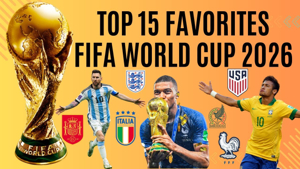
The race for the FIFA World Cup in 2026 is already shaping up to be one of the most competitive in history, and while fans love to throw around obvious favorites, the reality is much more complex. Some teams carry star power but have tactical flaws, while others may not dominate headlines yet possess the balance and structure needed to go all the way. If we strip away hype and look at squad depth, tactical identity, experience, and current trajectory, only a handful of teams truly stand out as realistic contenders.
France remain one of the strongest teams in world football, and it’s hard to ignore their consistency in major tournaments. Even after reaching the final in 2022, they continue to refresh their squad with elite young talent while maintaining a core of experienced winners. Their biggest strength lies in squad depth—few nations can rotate world-class players without dropping quality. The presence of players like Kylian Mbappé gives them a constant attacking threat, but what really makes France dangerous is their ability to adapt tactically. They can sit deep and counter or dominate possession depending on the opponent. The only concern is whether complacency or internal pressure could disrupt their rhythm, but on paper, they are as complete as it gets.
Brazil always carry the weight of expectation, and 2026 will be no different. What sets this Brazilian side apart is a new generation blending flair with tactical discipline. Unlike previous squads that relied heavily on individual brilliance, this team shows more structure in midfield and defense. Their attacking options are explosive, but the key will be whether they can remain composed in high-pressure knockout games. Historically, Brazil have sometimes struggled against well-organized European teams, but if they find the right balance, they are more than capable of lifting the trophy again.
Argentina, the reigning champions, cannot be overlooked. Winning the last World Cup gives them a psychological advantage that few teams possess. Even as Lionel Messi edges closer to the latter stages of his career, the team has evolved beyond relying solely on him. There is a strong collective identity, a sense of belief, and a tactical clarity that was evident in their last triumph. The question will be whether they can maintain that same hunger and intensity, because defending a World Cup title is one of the hardest challenges in football.
England are often labeled as underachievers, but their recent performances suggest they are closer than ever to breaking that narrative. With a young yet experienced squad, England possess strength in almost every department. Their attacking options are versatile, their midfield is technically strong, and their defense has matured significantly. The key issue has always been decision-making in crucial moments. If they can overcome that mental barrier and show composure under pressure, England have everything needed to go all the way.
Spain represent a different kind of threat. They may not have the same physical dominance as some teams, but their control of possession and tactical intelligence make them incredibly difficult to beat. Spain’s strength lies in their midfield, where they can dictate the tempo of any game. However, their challenge has been converting dominance into goals. If they can find consistent finishing in the final third, they become one of the most complete teams in the tournament.
Germany are another side that cannot be ignored, especially given their history of bouncing back after disappointing periods. Tournament football suits Germany because of their discipline, structure, and mentality. They rarely panic and are known for peaking at the right time. While they have gone through a transitional phase, there are clear signs of rebuilding. If their younger players step up and the team finds consistency, Germany could once again become a serious contender.
Portugal bring a blend of experience and youthful energy that makes them particularly dangerous. Even as Cristiano Ronaldo transitions out of a central role, the team has developed a new identity with emerging stars capable of carrying the attack. Portugal’s squad depth is one of the best in international football, and their tactical flexibility allows them to adjust based on the opponent. The question is whether they can fully transition into a new era without losing the leadership and big-game presence that has defined them.
The Netherlands have quietly rebuilt into a very balanced and disciplined team. They may not always dominate headlines, but their tactical organization and defensive solidity make them a difficult opponent for anyone. The Dutch approach is structured, and they are capable of controlling games without overcommitting. Their main challenge will be whether they can produce moments of brilliance in tight matches, as knockout football often comes down to small margins.
Belgium are entering what could be their last opportunity with a generation that has been labeled as golden but has yet to deliver a major trophy. While some key players are aging, there is still enough quality and experience to compete at the highest level. Belgium’s strength lies in their attacking creativity, but defensive vulnerabilities have often cost them. If they can tighten up at the back and maintain consistency, they still have a chance to surprise people.
Senegal stand out as the strongest African contender and a team that should not be underestimated. They have already shown their capability by winning continental titles and competing strongly against top teams. Senegal combine physical strength, tactical discipline, and individual talent, making them a well-rounded side. What makes them particularly dangerous is their fearlessness—they are not intimidated by big names. If they can maintain consistency and avoid injuries to key players, Senegal could go deep into the tournament and potentially cause major upsets.
When you step back and look at these ten teams, it becomes clear that winning the World Cup is not just about having star players. It’s about balance, mentality, and the ability to perform under pressure. Some teams will enter the tournament as favorites, but history has shown that the gap between favorites and challengers is often smaller than people think. One tactical mistake, one moment of brilliance, or one unexpected performance can completely change the outcome. That’s what makes the World Cup so unpredictable, and why even the strongest arguments on paper can be turned upside down once the tournament begins.




Leave a Reply